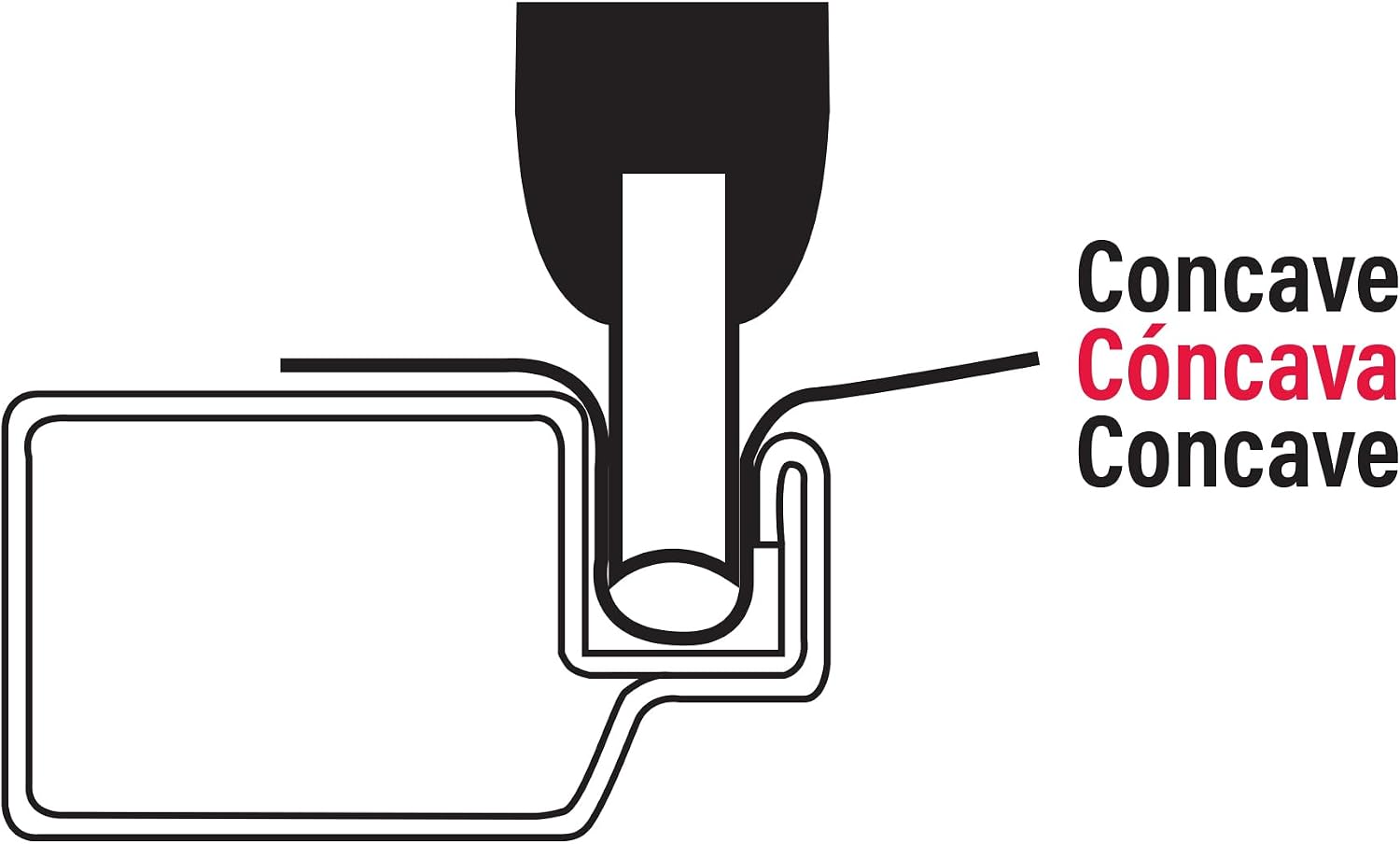
If you’ve ever had a torn patio or door screen — that mesh panel held in its frame by a flexible rubber or vinyl cord pressed into a groove around the perimeter — you’ve probably discovered there’s an entire category of inexpensive tools designed specifically for the job. That cord is called spline (it acts like a gasket, locking the mesh into the frame’s channel), and the tool you use to press it in is a spline roller (a small hand tool, usually with a concave wheel on one or both ends, that rolls the spline down into the groove without tearing the mesh). The repair kit you find at a home-improvement store almost always includes one of these rollers, but “included tool” and “good tool” are not the same thing. If you’re doing one repair a year, the difference barely matters. If you’re routinely re-screening porch panels, managing a rental property with multiple screen doors, or supplying a small contracting crew, the roller you keep in your toolbox has a real effect on how long the job takes and how clean the result looks. This guide breaks down your real options — by design, durability, and tradeoff — so you can make a deliberate choice rather than just defaulting to whatever came in the box.
What the Tool Actually Does (and Why Design Matters)
A spline roller’s job sounds simple: roll the spline cord into the frame’s channel in one continuous pass. In practice, two things go wrong with low-quality rollers. First, the wheel slips out of the channel and cuts or bunches the mesh instead of seating the spline cleanly. Second, the handle transmits enough palm fatigue over a 6- or 8-foot run that you start losing consistent pressure before you finish the panel.
Most rollers you’ll encounter fall into one of three categories:
Single-wheel budget rollers. These are the tools included in the $8–$15 combo kits sold alongside bulk spline at home-improvement chains. They have one concave wheel — the wheel’s concave profile is what keeps it centered in the channel — a simple plastic or light-alloy barrel, and a short handle. They work. They’re also the category most likely to have a wheel that wobbles after two or three panels, because the axle pin is often pressed rather than threaded.
Double-ended rollers. The standard step-up, ranging roughly $10–$25 as a standalone tool. One end has the standard concave wheel for pressing spline into the channel; the other end has a slightly convex or flat wheel used to crease the screen mesh into the channel before the spline goes in — essentially a pre-seating step that reduces the chance of mesh pulling loose or going uneven. This Old House’s screen-replacement editorial guide specifically calls out the two-step technique (crease first, spline second) as the method that produces a tight, bubble-free result, and a double-ended roller is built exactly for that workflow.
Ball-bearing ergonomic rollers. These are the tools serious re-screeners reach for. The wheel is mounted on a ball-bearing axle, which eliminates wobble and keeps consistent lateral pressure through the whole stroke. Handles are longer, often rubberized, and shaped to distribute grip pressure across the palm rather than concentrating it at the base of the thumb. Prices range from about $18 to $40 for quality examples. Published specs on these tools (per manufacturer product pages reviewed in editorial research) typically list a wheel diameter of 1 inch to 1.25 inches — larger diameter means the roller bridges minor channel irregularities rather than dipping into them.
The Tradeoffs, Named Explicitly
Here is where practitioners tend to make the call that costs them time later. Let’s name each tradeoff clearly.
Wheel diameter vs. channel width. Standard aluminum screen frame channels are cut to accept 0.140-inch or 0.160-inch spline. The roller wheel profile needs to match that channel width closely enough to stay centered without bottoming out. A wheel that’s too narrow for your channel will skate sideways; one that’s too wide won’t seat the spline fully. Most commercial double-ended rollers cover both common widths across their two ends. If you’re working with fiberglass framing (common in Screeneze-style channel systems, where the channel geometry can differ from standard extruded aluminum), verify the wheel width against the manufacturer’s channel spec before buying — Family Handyman’s screen repair tips article notes this as a common mismatch point that leads to spline pop-out within weeks of installation.
Handle ergonomics vs. portability. The ergonomic long-handle tools that make a full re-screen comfortable to do are bulkier to carry. If you’re doing single-panel repairs and keeping a kit in a drawer, a slim double-ender is easier to store. If you’re regularly doing full-enclosure re-screening — an 8x8 lanai panel, for example — the extra handle length becomes genuinely valuable. Bob Vila’s screen-door repair guide observes that wrist fatigue is the leading reason DIYers end up with loose corners on the first attempt; they rush the last foot of the run because their hand hurts.
All-in-one kits vs. standalone rollers. The $8–$15 kit you buy at a big-box store typically includes a roller, a 25-foot spool of 0.140-inch spline, and sometimes a small cutting tool. For a single repair, this is entirely rational — you need the spline anyway, and the roller cost is essentially free. The problem is that most of these kit rollers are the single-wheel pressed-axle type. For anyone doing more than one or two repairs, buying a quality standalone roller ($18–$25) and purchasing spline separately by the 100-foot or 500-foot spool (which drops the per-foot spline cost significantly) is better math.
By the Numbers
| Tool Type | Typical Price | Wheel Ends | Ball-Bearing Axle | Best For |
|---|---|---|---|---|
| Kit-included single roller | $0 (included) | 1 | No | One-time single-panel repair |
| Double-ended aluminum roller | $10–$25 | 2 | No (most) | Multi-panel DIY, regular porch maintenance |
| Ball-bearing ergonomic roller | $18–$40 | 1–2 | Yes | Frequent re-screening, full enclosure work |
Material and Build Details Worth Checking
Published spec sheets and aggregated owner reviews (sourced across tool retailer review platforms and summarized in editorial research) identify three build details that separate durable rollers from ones that fail under regular use:
Axle construction. A threaded axle with a locking nut outperforms a pressed pin every time. Owners consistently report that pressed-pin wheels develop lateral play after two to three panels of work; a threaded axle stays tight indefinitely. This is the single fastest way to distinguish a better roller from a cheaper one when you’re standing at the hardware store.
Wheel material. Nylon and high-density polyethylene wheels hold up well to the lateral friction of spline installation. Die-cast zinc wheels are heavier and more resistant to deformation but can corrode if stored damp — worth noting if your tool kit lives in a garage in a humid Florida or Gulf Coast climate, which is exactly where most of our readers are doing regular screen work. Steel wheels are rare in this category but show up on some contractor-grade tools; they’re durable but can nick or crease screen mesh if the pressure angle isn’t exactly right.
Handle grip. Rubberized or TPE (thermoplastic elastomer — a rubber-like material over-molded onto the handle for grip) handles consistently rate better in owner reviews for fatigue on long runs. Bare plastic handles are fine for a 10-minute single-panel repair but become slippery as hands warm up. Wirecutter’s general hand-tool review methodology notes that grip surface is one of the highest-correlation features between user satisfaction and tool design in the light hand-tool category — a finding that maps directly to screen rollers even though they aren’t a category Wirecutter reviews explicitly.
Matching the Tool to the Job: The Decision Framework
You have a project in front of you. Here’s the decision rule.
If you’re doing one repair — a single torn door or window screen — and you don’t already own a spline roller: Buy the combo kit. The included roller will do the job, you need the spline anyway, and the math doesn’t favor buying a premium standalone tool for one use.
If you’re doing 3–10 panels in a single session (a full porch re-screen, a landlord repair run, a contractor small job): Buy a double-ended ball-bearing roller as a standalone. The two-step technique (pre-crease with the flat/convex end, then seat the spline with the concave end) produces noticeably tighter corners, and the ball-bearing axle means you’re not fighting wheel wobble on panel eight the same way you were on panel one. Budget $18–$25. Buy your spline separately by the 100-foot minimum — the per-foot cost drops substantially compared to the 25-foot kit spool.
If you’re a contractor or dedicated DIYer doing regular re-screen work on a lanai, pool cage, or rental property portfolio: The ergonomic long-handle ball-bearing roller is worth the $30–$40. The fatigue reduction is real over a 200-foot or 300-foot run of spline, and the wheel consistency means fewer re-dos at corners. Pair it with a quality utility knife with fresh blades — the roller is only half the equation; a clean trim on the excess spline and mesh after seating is what determines how professional the finished panel looks.
One additional note for those working with motorized retractable screen systems (Phantom, Mirage, Lifestyle Screens): The spline and channel systems on motorized screen cassettes are not standard DIY re-spline territory. Those systems use manufacturer-specific tensioning and guide rail geometry that requires dealer service or at minimum factory documentation before any re-spline attempt. For everything else — fixed aluminum frames, standard porch panels, screen doors, and window screens — the guidance above applies directly.
The Bottom Line
The spline roller is a $10–$40 tool that most people never think about until they’re mid-repair and frustrated that the wheel keeps skating off the channel. The good news is the category is inexpensive enough that choosing right costs almost nothing extra versus choosing wrong. A double-ended ball-bearing roller in the $18–$25 range handles the vast majority of porch, door, and window screen repair work that a homeowner or small contractor will encounter. The single-wheel kit tools earn their place for one-off repairs where you need spline anyway. And if you’re doing high-volume work, the ergonomic long-handle options are the logical step up.
Buy the tool that matches your realistic repair frequency, check the axle construction before you commit, and match the wheel width to your frame’s channel spec. That’s the whole decision.